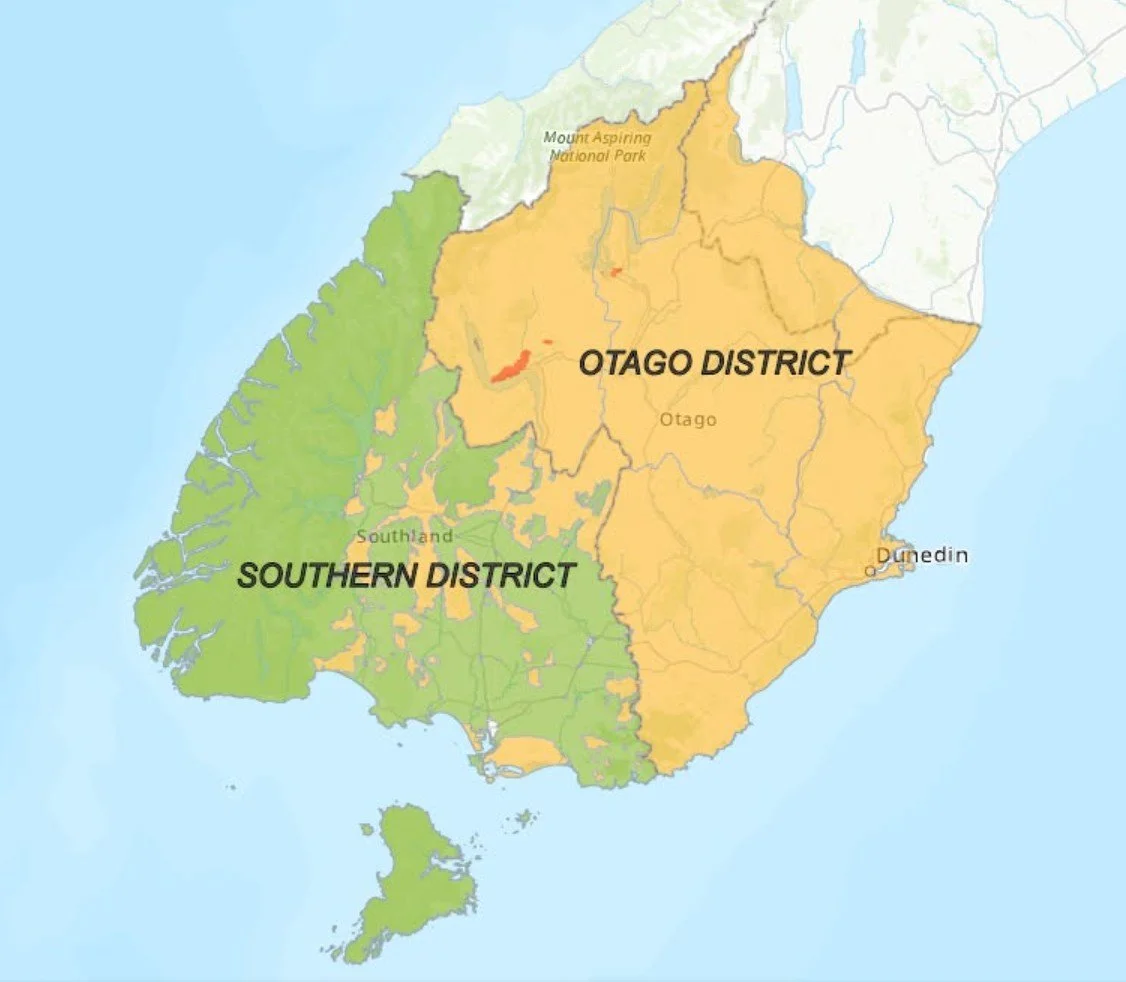
Lot Onehalf Limited (the Company) is the registered forestry right (RFR) holder and project owner and operator of two forests in the southern part of New Zealand, one in Southland and one in Otago. each is approximately the same size. The forests ARE professionally managed by PFS Olsen Limited, one of Australasia’s largest forestry managers.
Under the terms of its RFR the forests are to be established and maintained until at least 2045, however, the Company is committed to growing the forests on past that date to assist New Zealand meet its international obligations under the Paris Agreement and its domestic obligations under legislation, such as the 2050 carbon zero law.
The Company was granted the RFR’s in 2009 although the forests were 11-12 years old at that time.
The forests are maintained to the highest industry standards.
About the company
The company’s business is growing forests to the highest industry standards with the goal of sequestering as much carbon as possible for the longest period possible. This must, however, always be done consistently with ISO 14064-2 and standards verified to it, and in a way that allows verification of CO2 sequestration to such standards. The latter includes the PFS Methodologies Standard, which requires compliance with the principles and essential requirements of A6.4 Paris Agreement (PA). It must also be done to best industry sustainability standards.
Compliance with ISO 14064-1 and ISO 14064-2 assists New Zealand meet its international and domestic climate change goals and obligations and as such benefits the world.
The company is a closely held private company. The Company complies with all New Zealand laws and regulations and is registered for both income tax and GST. The Company’s accounts are professionally prepared by registered chartered accountants.
The Company entrusts day to day forestry operations to the forest manager. The forest manager prepares annual forestry programmes, budgets and a wilding control plan and once they are approved by the Company ensures they are carried out. The forestry manager also prepares bi-annual reports for the Company.
Approved forest activities include ensuring forest health, access, wilding control and fire-fighting potential.
Forest properties
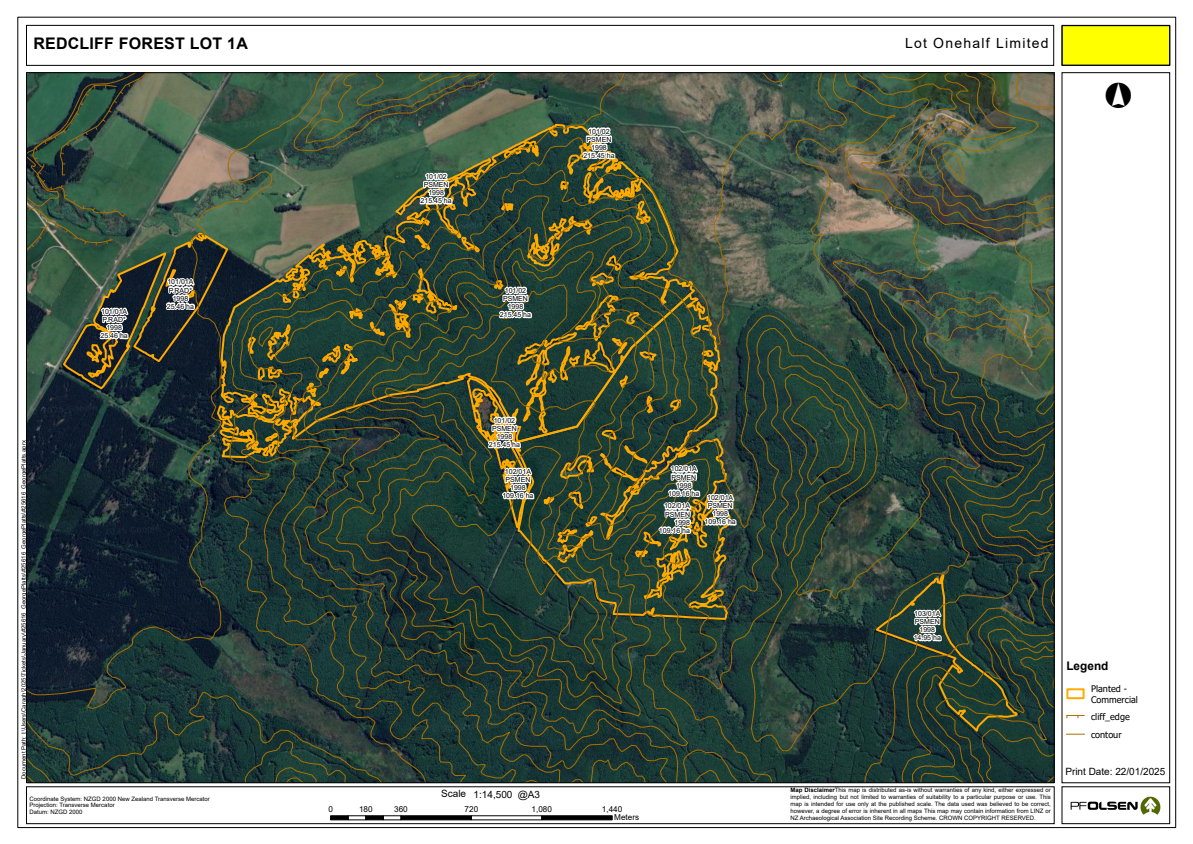
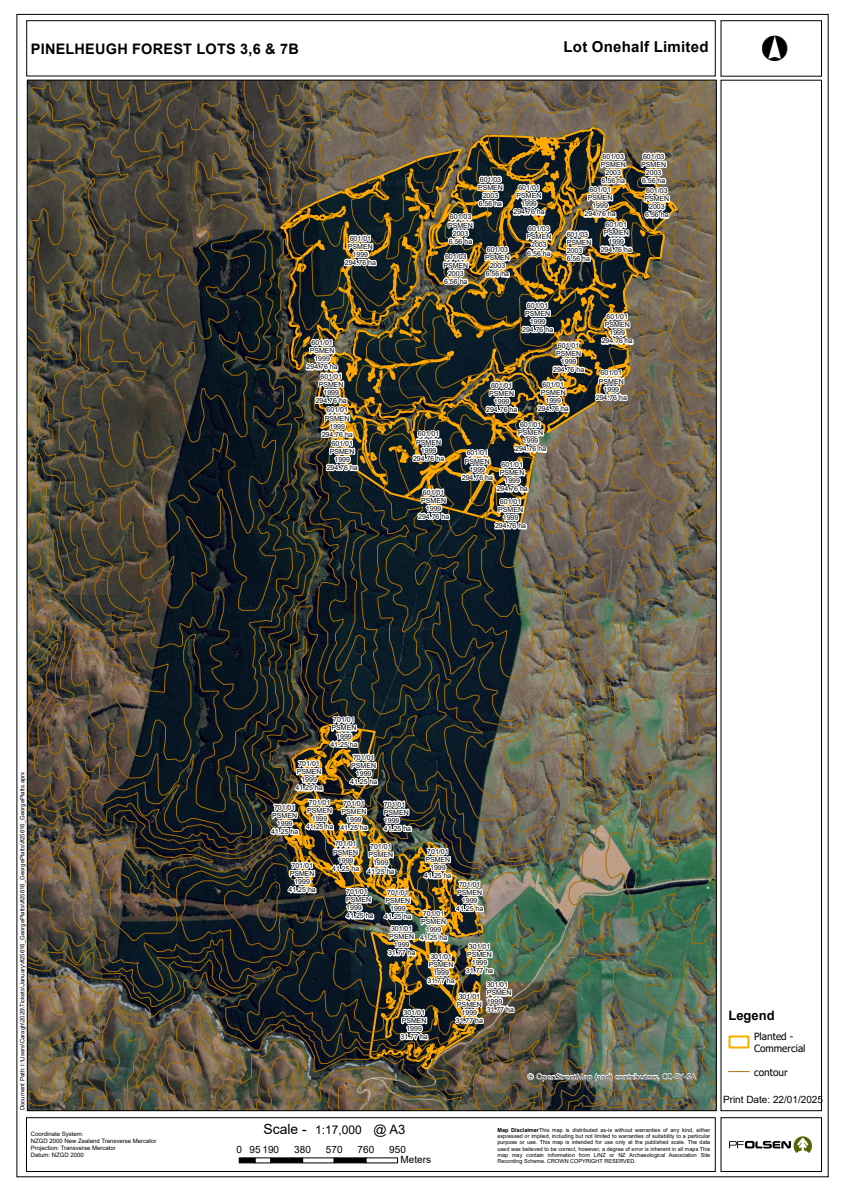
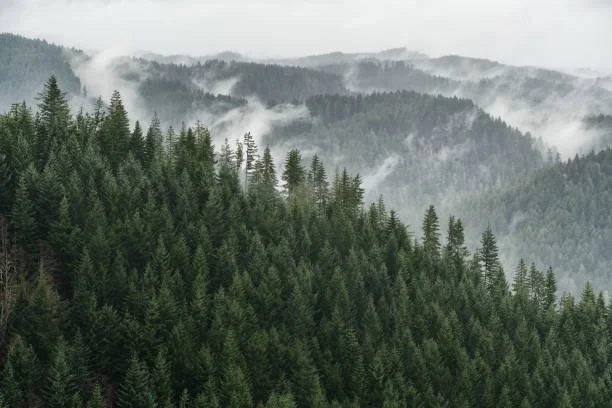
The forests consist predominantly of plantation Douglas fir, planted in 1997 at 1998 at 1,666 stems/hectare with a natural thinning regime.
Forest Locations
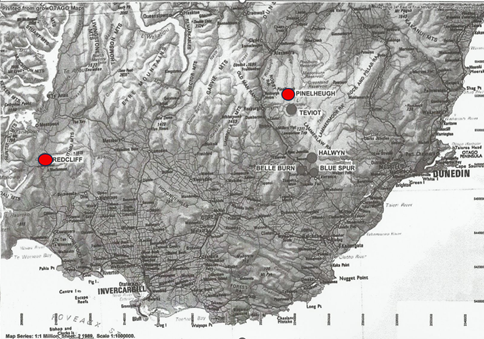
Redcliff Forest gate
S – 45 ̊40’ 44”
E – 167 ̊ 39’ 57”
Pinelheugh Forest gate
S – 45 ̊ 32’ 7”
E – 169 ̊ 28’ 26”
Sustainability and environmental management
The Company’s forests are in the process of being verified by PFS Certification Ltd and SGS to PFS Standards (www.pfs-carbonstandard.com) which have themselves been validated to ISO 14064-1 (2018) and ISO 14-064-2 (2019) by SGS, the world’s largest inspection, testing and verification body.
As part of that verification, the Company must comply with the UNFCC 17 SDG goals and also A6.4-TOOL-AC-001 sustainable development tools.
Verification results, redacted as allowed (e.g. for commercially sensitive disclosures), will in due course be available on this website.
The Company also holds SGS Sustainability Assurance certificates.
The company has a strong commitment to environmental stewardship practices. The forest manager is required to manage the forests in ways which reflect this.
In time, it is intended the planation forests will be selectively felled and native species will be able to use the continuing shade canopy to propagate and grow.
The forests are presently sequestering approximately 60 tonnes CO2 per hectare per annum. This represents a significant contribution to New Zealand fight against climate change, especially given the company’s commitment not to reverse this sequestration.
While sequestration rates diminish over time, the forests may likely sequester at least 3.5m tonnes CO2 over the next 100 years. That sequestration does not presently get added to New Zealand’s NDC under PA rules, but because of the Company’s commitment to long term non-reversal it now can be. IF ITMOs trade at US$50/tonne, and given New Zealand is presently estimated to be in deficit of at least 87m tonnes CO2-e by 2030, this could represent a saving to New Zealand of at least NZ$280m over the lifetime of the forests. This is obviously in the national interest.
The forest fire management plan is prepared and maintained by the forest manager. Under the terms of its RFR the Company is required to comply with all laws affecting it, including e.g., the Forestry Act and the Biosecurity Act.
The Company is aware of wilding issues and has a proactive approach to these, including a wilding control program and agreements with neighbouring properties to access their properties for wilding control.
Health and safety
The Company is not carrying out any felling operations, so health and safety risks are limited to ongoing forestry maintenance such as wilding control. Both the forestry manager and contractors are required to comply with all health and safety regulations. Over the life of the forests no health and safety breaches or incidents have been recorded.

Community and land stewardship
The land on which the forests are growing of planting was, for many years, exclusively used for pastoral dry stock farming.
As the land is gently rolling there has been no need for land rehabilitation.
Present forestry employment is limited to contracted forestry services not otherwise provided by the forest manager. This may provide limited local employment.
The Company does allow recreational hunters to use the property from time to time.
Other than this the Company has few opportunities to interact with local farmers.